The Unseen & Unknown
Identifying rare clinical phenotypes and resections without expert labels through OOD detection.
Scientific Thesis
Open Challenges
Agnostic Sensitivity
Develop representations that remain sensitive to the full pathological spectrum without encoding assumptions about anomaly appearance, prevalence, or intensity.
The False Positive Bottleneck
Disentangle pathological deviations from benign anatomical variability to prevent increased open-world sensitivity from translating into clinically prohibitive false-positive rates.
Integrity of Open-World Generalization
Establish datasets and evaluation protocols that explicitly stress test UAD methods under open-world conditions, including rarity, heterogeneity, and previously unseen disease phenotypes.
Key Publications
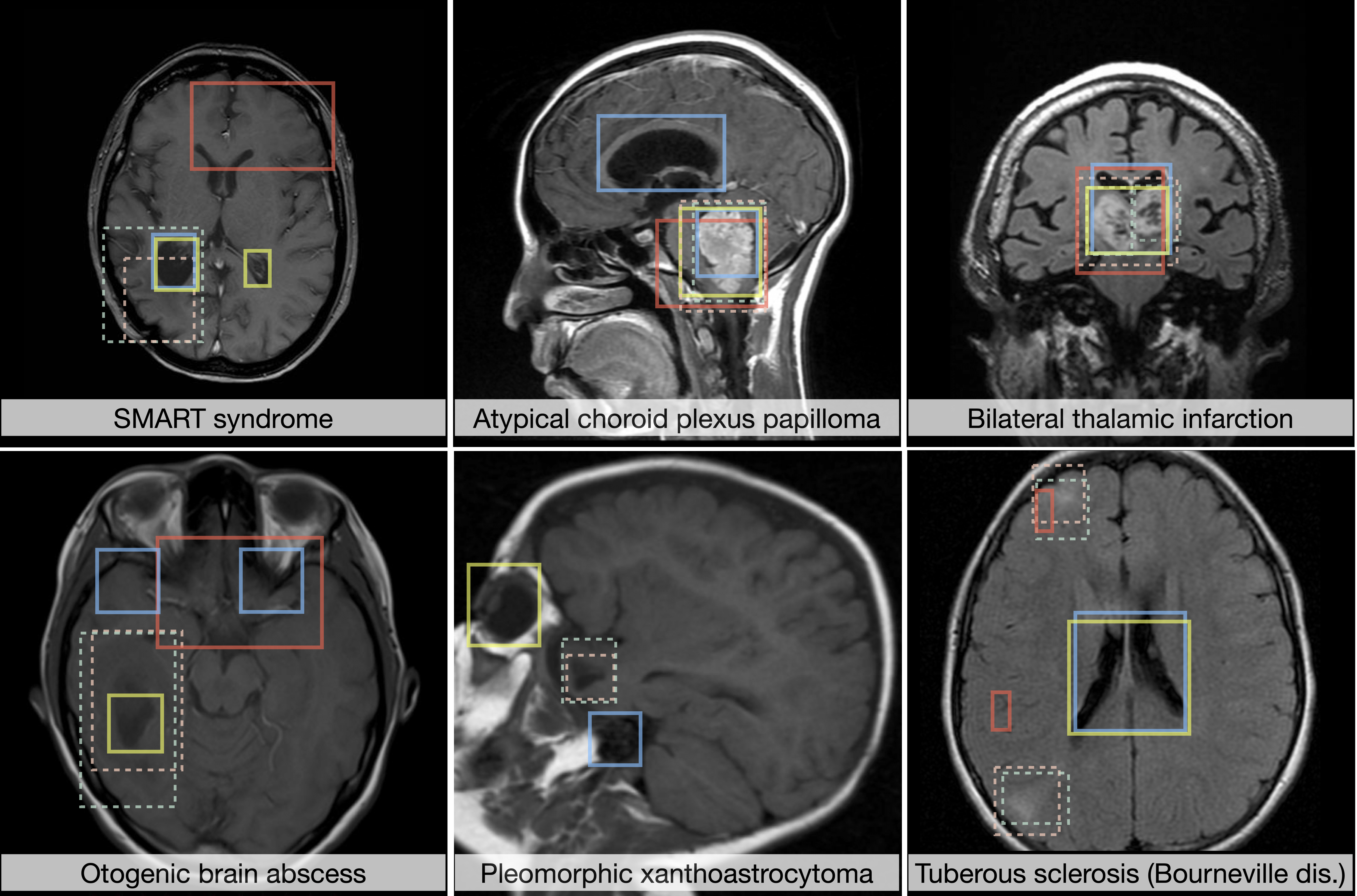
NOVA: A Benchmark for Rare Anomaly Localization and Clinical Reasoning in Brain MRI
Cosmin I. Bercea, Jun Li, Philipp Raffler, Evamaria O. Riedel, Lena Schmitzer, Angela Kurz, Felix Bitzer, Paula Roßmüller, Julian Canisius, Mirjam L. Beyrle, Che Liu, Wenjia Bai, Bernhard Kainz, Julia A. Schnabel, Benedikt Wiestler
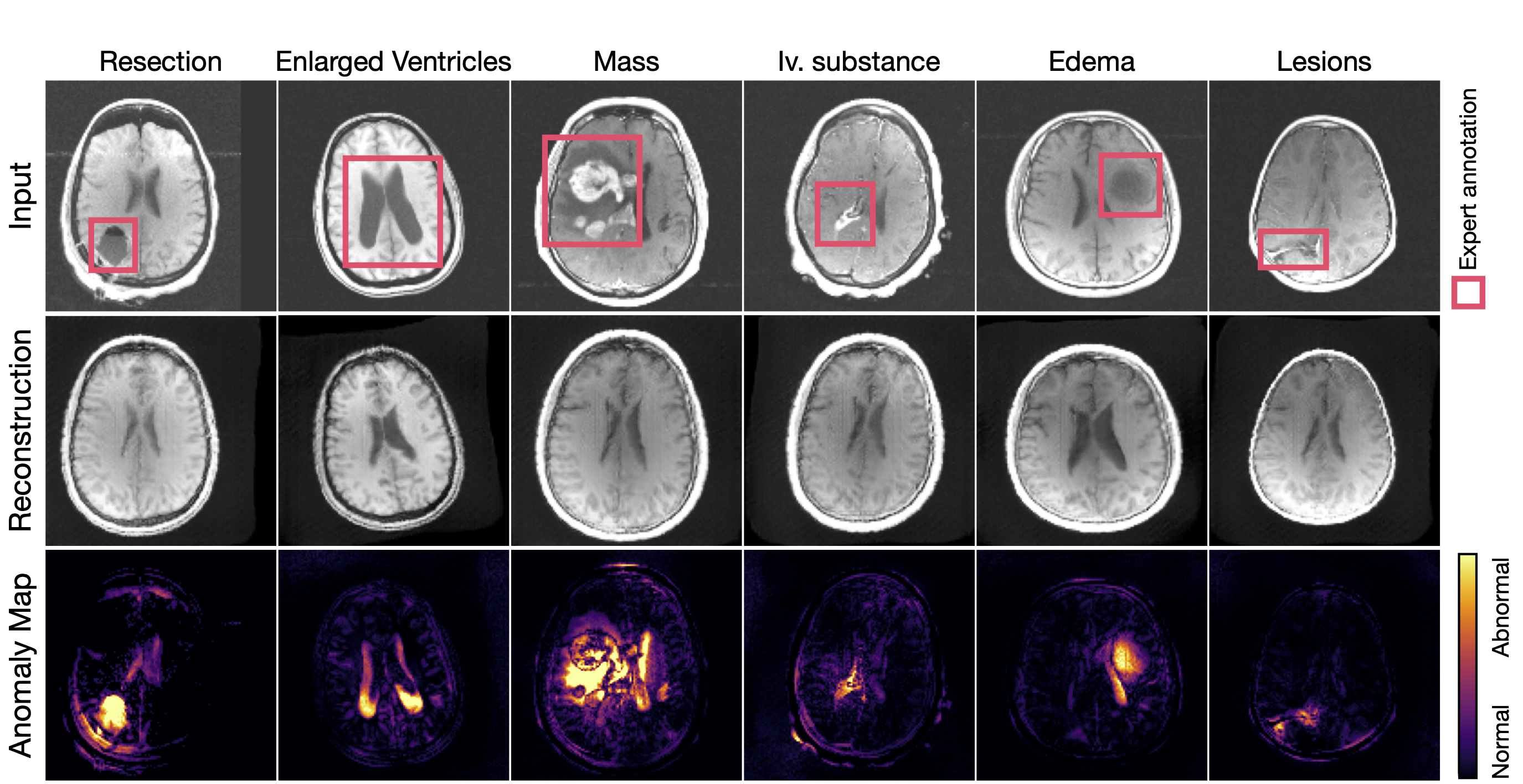
Generalizing Unsupervised Anomaly Detection: Towards Unbiased Pathology Screening
Cosmin I. Bercea, Benedikt Wiestler, Daniel Rückert, Julia A. Schnabel