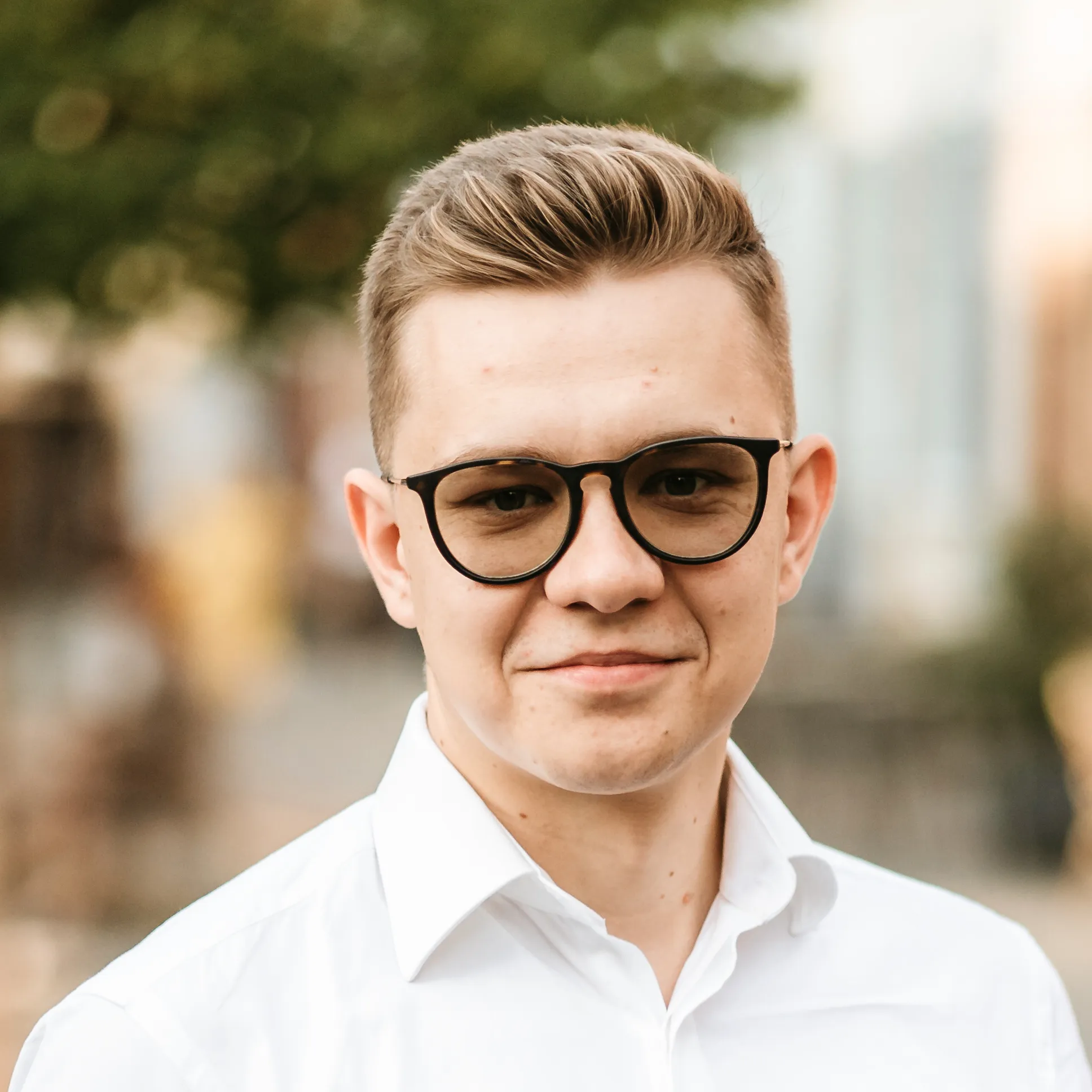
I develop generative AI to reason about the unseen for early and rare pathology detection in large-scale medical imaging.

My research focuses on normative learning, anomaly detection, and multimodal clinical grounding, with an emphasis on interpretability and clinical trust.

Cosmin I. Bercea
Postdoctoral Researcher in Generative AI & Medical Imaging
Technical University of Munich (TUM)
Recent
Papers, awards, journals, and milestones.

Selected Contributions

A curated set of benchmark, evaluation, and method contributions.

NeurIPS (Datasets & Benchmarks) β€’ 2025
β†—

NOVA: A Benchmark for Anomaly Localization and Clinical Reasoning in Brain MRI

A zero-shot, evaluation-only benchmark featuring 281 rare pathologies and 900 multi-modal scans, designed to stress-test vision-language models on their ability to bridge the distribution gap between spatial detection and clinical narrative.

Why it matters
Exposes a significant 'reasoning gap' in current VLMs, where performance on rare clinical cases remains substantially below resident-level expertise despite high-quality visual inputs.
Paper β†— Dataset β†— HF downloads (last 30d): β€”
Nature Communications β€’ 2025
β†—

Evaluating normative representation learning in generative AI for robust anomaly detection in brain imaging

A systematic study introducing metrics (RQI, AHI, CACI) to evaluate how well generative models learn 'normative' anatomy, validated by a multi-reader study comparing AI-generated counterfactuals against radiologist judgment.

Why it matters
Demonstrates that standard reconstruction metrics (PSNR/SSIM) are poor proxies for clinical utility, advocating for evaluation focused on the anatomical plausibility of the 'healthy' restoration.
MICCAI β€’ 2023
β†—

Reversing the Abnormal: Pseudo-Healthy Generative Networks for Anomaly Detection

Introduces PHANES, a framework that avoids image-wide stochastic alterations by using latent generative networks to selectively mask and inpaint abnormal regions while preserving the patient’s healthy anatomical context.

Why it matters
Provides a more stable alternative to global diffusion-based reconstruction, significantly reducing false positives in the detection of focal lesions like stroke.
Nature Machine Intelligence β€’ 2022
β†—

Federated disentangled representation learning for unsupervised brain anomaly detection

A federated learning approach that disentangles global anatomical shape from site-specific scanner appearance, allowing institutions to collaboratively model 'healthy' anatomy without sharing raw patient data.

Why it matters
Achieves up to 227% improvement in lesion segmentation over local models by leveraging cross-institutional shape priors while mitigating statistical heterogeneity (domain shift).
Scroll

Empowering the Next Generation

Teaching and Supervision

As part of my involvement in the MICCAI Student Board , where I serve as Scientific Events Officer, I have been able to initiate and support student-focused activities within the medical imaging community, including leading initiatives such as the EMERGE Workshop .

In parallel, I have been involved in teaching at the Technical University of Munich . Since 2022, I have been leading graduate-level seminars on Anomaly Detection and AI for Vision and Multimodal Learning. I have also contributed to the AI in Medicine course as a tutor since 2023, with primary responsibility for practical sessions and, most recently, an invited lecture on generative models.

Selected student projects resulting from these teaching and mentoring activities are shown below.

Selected student outcomes
β˜… Best Paper
β†— Impact
βœ“ Early Accept
WACV 2026 βœ“

Jun Li

PhD Student
βœ“ Early Accept
WACV 2026

Jun Li

"Knowledge to Sight: Reasoning over Visual Attributes via Knowledge Decomposition for Abnormality Grounding"

#EarlyAccept Full Paper
MICCAI 2025

Chun Kit Wong

Visiting Researcher from DTU
MICCAI 2025

Chun Kit Wong

"Influence of Classification Task and Distribution Shift Type on OOD Detection in Fetal Ultrasound"

MICCAI 2025 EMERGE Workshop

Samuel James Roughly

Master Project
MICCAI 2025 EMERGE Workshop

Samuel James Roughly

"GroundingDINO for Open-Set Lesion Detection in Medical Imaging"

MICCAI 2024 MMMI Workshop

Jun Li

PhD Student
MICCAI 2024 MMMI Workshop

Jun Li

"Language models meet anomaly detection for better interpretability and generalizability"

MICCAI 2023 Sashimi Workshop β†—

Malek Ben Alaya

Master's Thesis
β†— Impact
MICCAI 2023 Sashimi Workshop

Malek Ben Alaya

"MedEdit: Counterfactual Diffusion-Based Image Editing on Brain MRI"

#TopCitedAward (10+) Full Paper
MICCAI 2024 EMERGE Workshop β˜…

Mehmet Yigit Avci

Guided Research Project
β˜… Best Paper
MICCAI 2024 EMERGE Workshop

Mehmet Yigit Avci

"Unsupervised Analysis of Alzheimer’s Disease Signatures using 3D Deformable Autoencoders"

#BestPaperAward Full Paper
MICCAI 2024 ASMUS Workshop

Hanna Mykula

Master's Thesis / GRP
MICCAI 2024 ASMUS Workshop

Hanna Mykula

"Diffusion models for unsupervised anomaly detection in fetal brain ultrasound"

MICCAI 2024 ADSMI Workshop β˜…

Sameer Ambekar

PhD Student
β˜… Best Paper
MICCAI 2024 ADSMI Workshop

Sameer Ambekar

"Selective Test-Time Adaptation for Unsupervised Anomaly Detection using Neural Implicit Representations"

#BestPaperAward Full Paper
ICML 2023 IMLH Workshop β†—

Michael Neumayr

GRP
β†— Impact
ICML 2023 IMLH Workshop

Michael Neumayr

"Diffusion Models for Unsupervised Anomaly Detection"

TopCitedAward (50+) Full Paper